Traditional SEO Foundations and the Evolution of Search in the AI Era
Search Engine Optimization (SEO) has been one of the most effective digital marketing disciplines. The goal of SEO was simple: rank higher, attract more traffic, and generate more business.

Share this post
Search Engine Optimization (SEO) has been one of the most effective digital marketing disciplines. Businesses invested in keyword research, content creation, technical optimization, and link building to improve their visibility on search engines .The goal was simple: rank higher, attract more traffic, and generate more business. However, the rise of Artificial Intelligence is reshaping how people discover information online. Millions of users are no longer relying exclusively on traditional search engines. Instead, they are turning to AI-powered platforms such as ChatGPT, Claude, Gemini, Perplexity, and AI assistants that are integrated into productivity tools and web browsers. These platforms provide direct answers instead of a list of links, and provide valuable information instead of showing a lot of websites.
What Is SEO? A Complete Beginner's Guide
SEO is the practice of improving a website so that it appears higher in search engine results when people search for topics related to your business. Unlike paid advertising, SEO is organic, meaning you do not pay for each click. A well-optimized website can attract thousands of visitors every month without spending money on ads. The results compound over time; a well-optimized page can bring traffic for years.
SEO is not just about Google either. It applies to Bing, YouTube, Amazon, and increasingly to AI platforms like ChatGPT and Perplexity, which are covered in detail later in this guide.
How Search Engines Work: Crawling, Indexing and Ranking
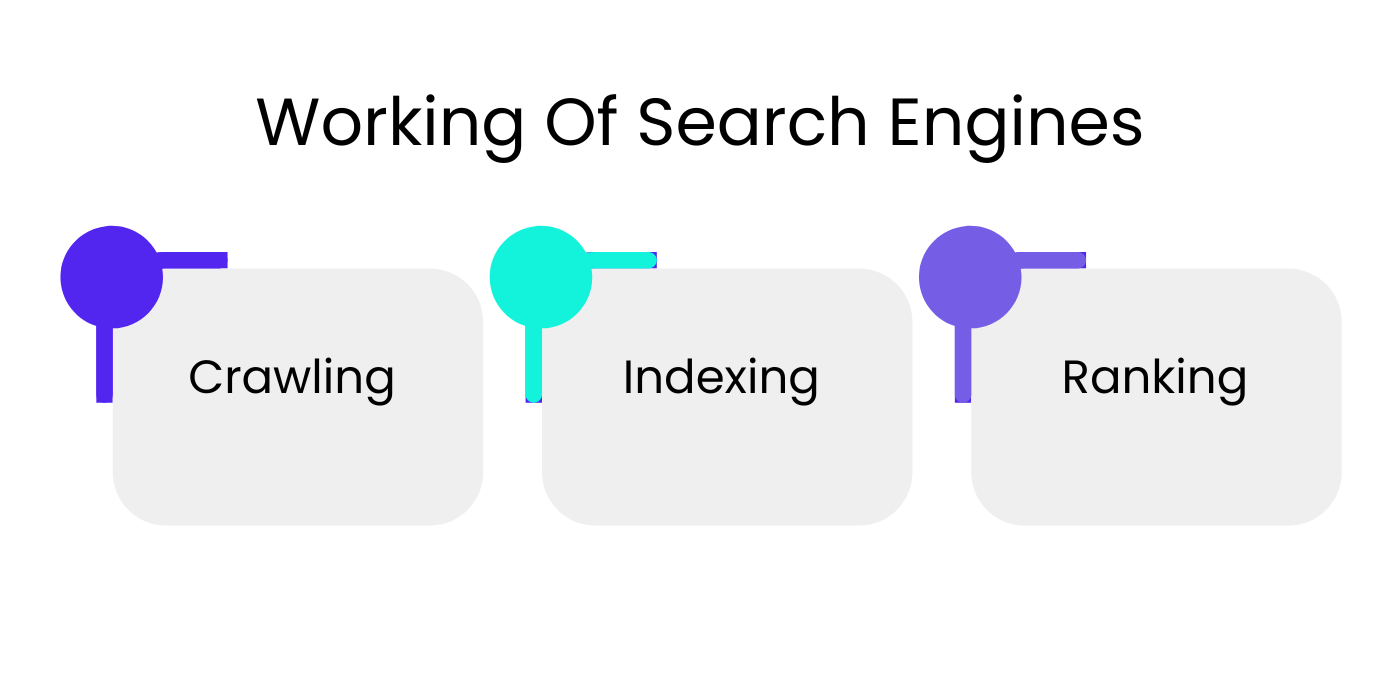
How Search Engines Work
Before you can optimize for search engines, you need to understand what they actually do. Search engines operate in three main stages.
Crawling
Search engines use automated bots called crawlers or spiders to browse the internet. These bots follow links from page to page, discovering new and updated content. Google's crawler is called Google-bot. If your website blocks crawlers or has broken internal links, your content may never be discovered regardless of how good it is.
Indexing
Once a page is crawled, its content is analyzed and stored in a massive database called the index. Think of it as Google's giant catalogue of every page it knows about. If a page is not indexed, it simply does not exist in Google's eyes. A website can have excellent content that never ranks simply because a technical issue prevented indexing.
Ranking
When a user performs a search, Google's algorithm scans the index and ranks pages based on hundreds of factors. These factors determine which pages appear on page one and in which order. Core ranking factors include content relevance and quality, the authority of the website, page experience signals, and the intent behind the user's query. The goal of SEO is to signal to Google that your page deserves a top position for relevant searches.
What are the Four Pillars of Traditional SEO
Traditional SEO depends on four main pillars.
On-Page SEO
On Page SEO covers everything on the actual website pages: the content, headings, title tags, meta descriptions, keyword usage, internal linking, and image optimization. On-page SEO makes each page clearly communicate its topic to both users and search engines. Well-structured on-page SEO helps Google understand what a page is about and whether it deserves to rank for a specific query.
Off-Page SEO
Off Page SEO refers to everything that happens outside the website that affects rankings. The most important off-page factor is backlinks. When other reputable websites link to yours, Google sees it as a strong authority signal for your website. Social signals, brand mentions, digital PR, and guest postings also fall under off-page SEO. The quality of backlinks matters far more than quantity.
Technical SEO
This is the backend of a website: site speed, mobile-friendliness, secure HTTPS connections, proper URL structures, XML sitemaps, structured data, schema markups and crawlability. Technical SEO ensures that search engines can access and understand a site without obstacles. A website can have the best content in the world, but if it loads slowly or has crawl errors, it will struggle to rank.
Local SEO
Local SEO ensures that the businesses that serve a specific geographic area should appear in searches. It involves optimizing the Google Business Profile, collecting genuine customer reviews, building local citations, and ensuring consistent business information across directories.
The Evolution of SEO
From Keywords to Search Intent
For the first decade of SEO, the game was simple: find a keyword, use it in your page, and rank for it. Today, that thinking is dangerously incomplete. Search intent refers to the underlying goal behind a search query. Google has become remarkably good at understanding intent, which means you can no longer just target a keyword; you must satisfy the intent behind it. There are four main types of search intent:
- Informational: The user wants to learn something. Example: What is content marketing?
- Navigational: The user wants to find a specific website. Example: Facebook login.
- Commercial: The user is researching before buying. Example: Best CRM software .
- Transactional: The user is ready to take action. Example: Buy Nike Air Max size 10.
E-E-A-T and Trust in the Age of AI
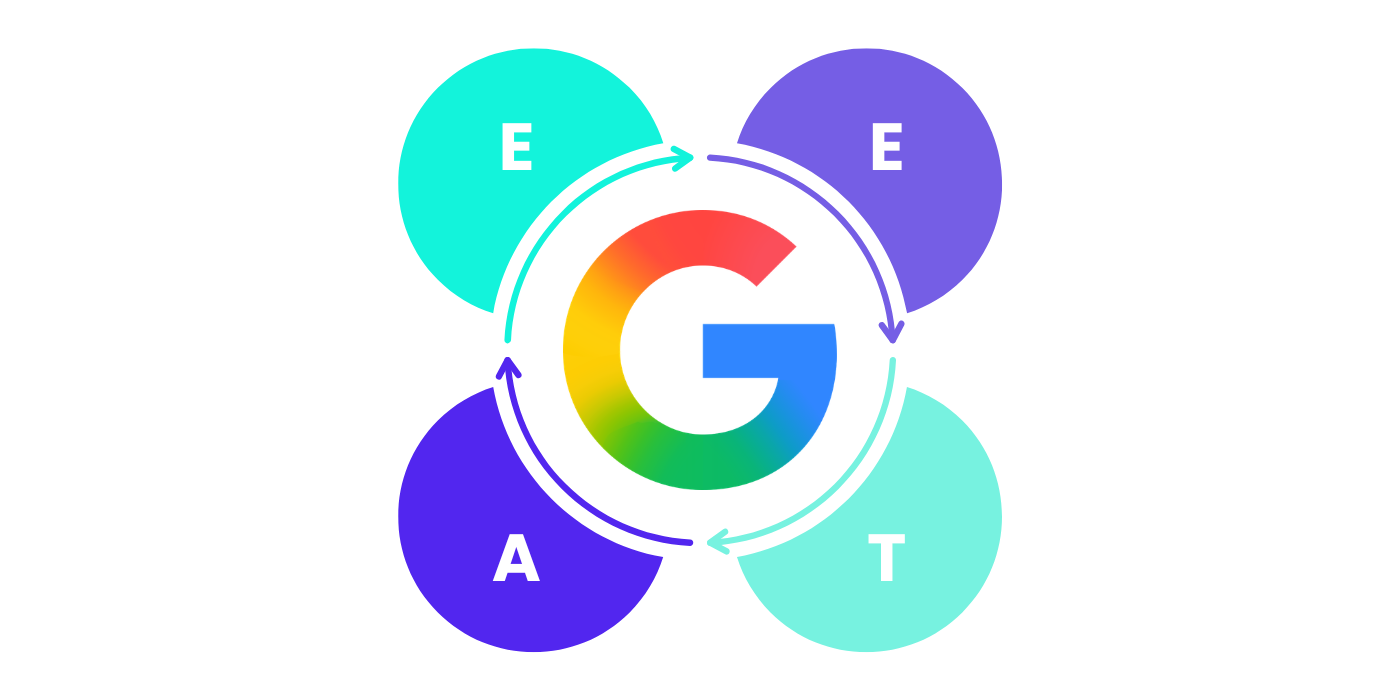
E-E-A-T
Google's E-E-A-T framework stands for Experience, Expertise, Authoritativeness, and Trustworthiness.
Experience
Experience refers to firsthand knowledge or direct involvement with a subject. Businesses that share case studies, project insights, lessons learned, and real-world examples demonstrate stronger experience signals. A product review written by someone who has actually used the product consistently outperforms one written without direct experience.
Expertise
Expertise focuses on specialized knowledge. Detailed explanations, industry insights, technical accuracy, and educational content help establish expertise within a specific field. For medical, legal, and financial content, Google holds expertise standards especially high because the stakes for users are greater.
Authoritativeness
Authority is developed when other reputable websites, publications, and professionals recognize a brand as a trusted source. Industry mentions, citations, partnerships, media coverage, and references from credible sources all contribute to authority signals.
Trustworthiness
Trustworthiness includes transparency, accuracy, security, and consistency. Contact information, company details, privacy policies, author profiles with real credentials, and factual accuracy all contribute to trust signals. A website that cannot be identified as a real organization will struggle to rank for competitive queries.
The Rise of Zero-Click Searches: When Google Stopped Sending Traffic
In the early days of search, nearly every Google query resulted in a click to a website. Today, that is no longer true. Zero-click searches occur when Google answers a question directly on the search results page through featured snippets, knowledge panels, People Also Ask boxes, calculators, weather widgets, and now AI Overviews. The user gets their answer without ever visiting a website.
According to data from Semrush and SparkToro, more than 60 percent of Google searches now end without a click. For informational queries, that number is even higher. This fundamentally changes what ranking means. Appearing at position one is no longer enough on its own.
The strategies that help here include structured data markup, FAQ schema, concise and direct answers within content, and building brand recognition so users specifically seek out your brand by name regardless of whether they find you through a click.
Content Quality vs Content Quantity
For years, many SEO strategies relied on publishing large volumes of content to capture as much search traffic as possible. The more pages, the more keywords covered, and the more traffic. Google has systematically dismantled this approach.
Today, a single comprehensive, well-researched piece of content consistently outperforms dozens of thin, repetitive pages. Google measures quality through signals including dwell time (how long users spend on a page), the rate at which users return to search results after visiting a page suggesting they did not find what they needed, engagement and scroll depth, and whether the content demonstrates original insight.
The shift is from content marketing to topical authority: becoming the most comprehensive, trustworthy resource on a subject rather than simply publishing more pages than competitors.