Mastering JavaScript: A Guide for Developers
Learn the most widely used programming language in web development and the backbone of modern web applications.

JavaScript is one of the most widely used programming languages in the world. It is also the most commonly used language in web development and is the backbone of modern web applications. It has had extensive support and now it is used for framework and can handle backend development well thanks to the introduction of Node.js. Whether a developer belongs to the field of web development, mobile development, or creating a software application, JavaScript is an essential skill to learn. All the developers of Data Pulse Technologies are extremely skilled and experienced in this programming language and this guide will go over everything you need to know to master it.
Basic Concepts
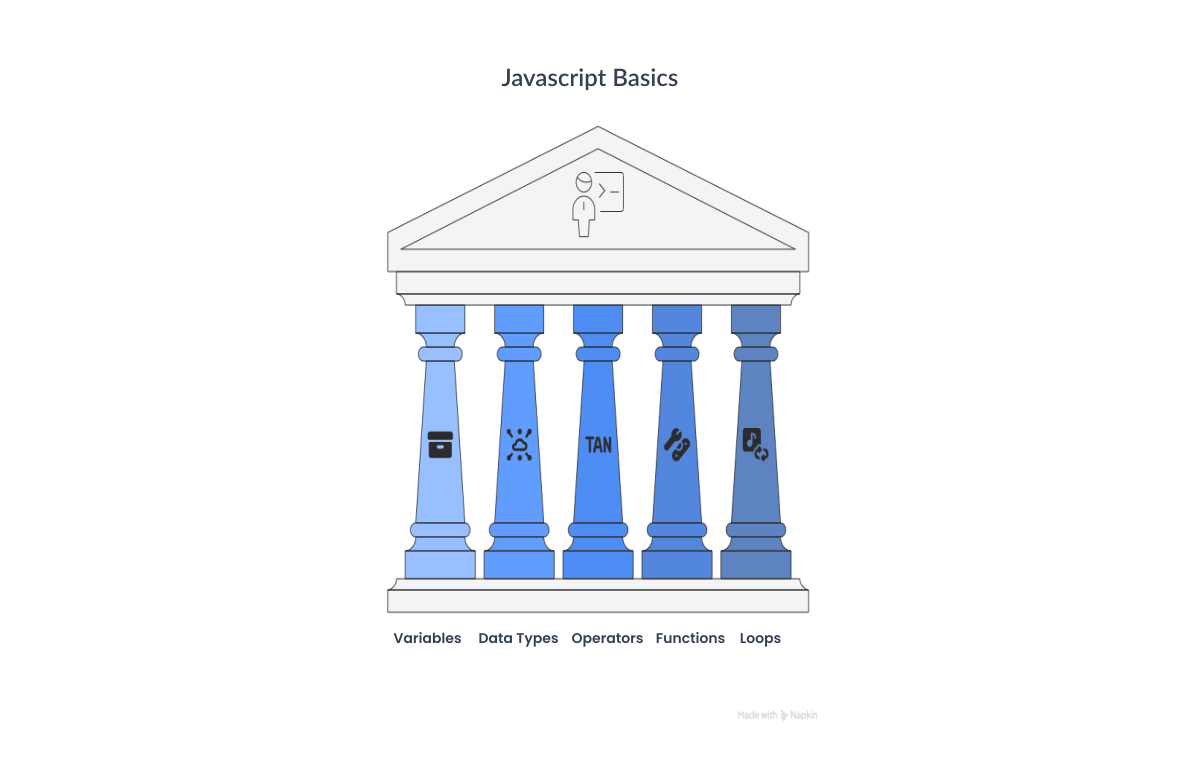
JavaScript can seem a bit intimidating for new developers, but once you understand the basics it is not as hard as it seems. It is a high-level language, interpreted programming language that runs on web browsers. Some early basic concepts that everyone should know are:
- Variables: Variables are declared using var, let, and const. These are assigned specific values that belong to certain data types. Variables are the core of any programming language and their manipulation makes up the program.
- Data Types: There are several data types available in JavaScript, the most notable of which are Strings, Numbers, Booleans, Objects, and Arrays.
- Operators: These are different arithmetic, logical, and comparison operators that are used for the manipulation of variables.
- Functions: Functions are reusable block of code that executes a specific portion of the code. These can be invoked over and over.
- Loops: Loops allow developers to execute a block of code for a specified number of times. While loop is used as long as a specific condition is satisfied, for loop is used when the block of code needs to be executed for a specified number of iterations and do…while loop executes at least once, even if the specified condition is false.
Key Areas of Tech Consutling
React JavaScript: Enhancing UI Development
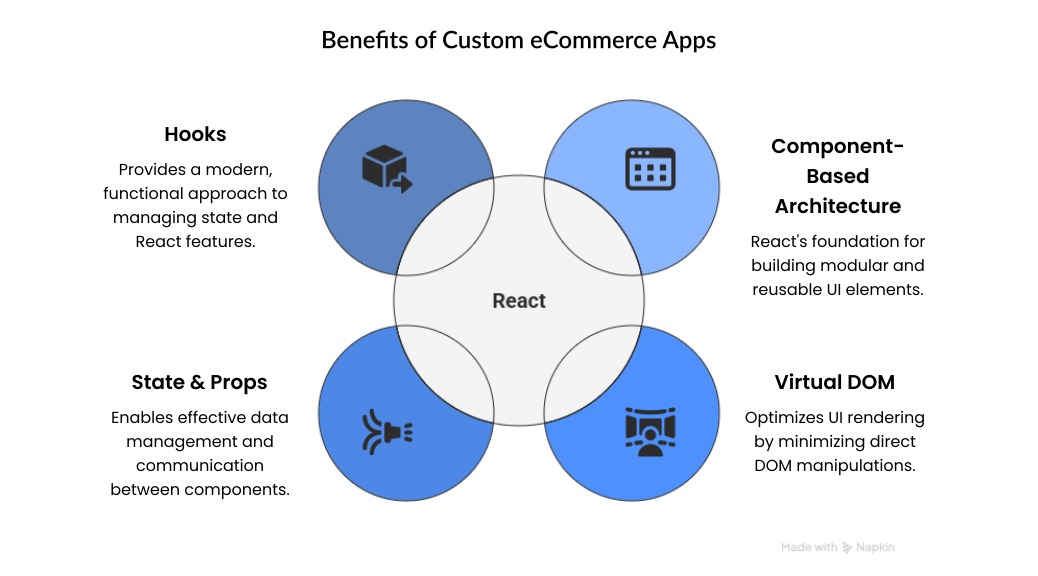
React was developed by Facebook and is one of the most popular JavaScript libraries. It is used for front-end development and is used worldwide for developing user interfaces. The main appeal of React comes from its feature of having reusable components. This library has a component-based architecture that enhances the overall code reusability. The key features of React include:
- Variables: Variables are declared using var, let, and const. These are assigned specific values that belong to certain data types. Variables are the core of any programming language and their manipulation makes up the program.
- Data Types: There are several data types available in JavaScript, the most notable of which are Strings, Numbers, Booleans, Objects, and Arrays.
- Operators: These are different arithmetic, logical, and comparison operators that are used for the manipulation of variables.
- Functions: Functions are reusable block of code that executes a specific portion of the code. These can be invoked over and over.
- Loops: Loops allow developers to execute a block of code for a specified number of times. While loop is used as long as a specific condition is satisfied, for loop is used when the block of code needs to be executed for a specified number of iterations and do…while loop executes at least once, even if the specified condition is false.
Web Maintenance Services
JavaScript in Node.js
Node.js is a runtime environment for JavaScript that is used for backend development. Node.js also allows for JavaScript to run outside of web browsers. It follows an event-driven architecture that efficiently handles different connections. Node.js is extremely strong for handling data-intensive applications thanks to its ability to utilize callbacks, promises, and async/await. It also has some useful modules like fs for file handling and HTTP. Node.js also allows developers to install and manage various libraries thanks to the built-in packet management system known as npm (Node Package Manager). It is an essential skill to learn in the modern era of web development as it enables JavaScript to be used for full-stack development.
JavaScript Object Notation (JSON)
JSON (JavaScript Object Notation) is a data exchange method known and functions as a minimalistic format between server-side applications and clients. JSON provides easy readability along with universal use in APIs and web applications because of its simple writing and reading properties.
- The JSON.parse() method converts JSON text to JavaScript objects.
- JSON.stringify() transforms JavaScript objects into JSON text.
Modern applications use JSON for deductions and storage purposes to achieve effective and organized data transfer operations. Data Pulse Technologies has also been taking advantage of this method in their projects which are related to data extraction.
JavaScript for the Future
Ever since its invention, JavaScript continues to be a dominant force in the field of web development. Originally, made for frontend design, it is now used for full stack development. The development of React, a JavaScript library, by Facebook, has made creating interactive web applications easier than ever. Node.js has enabled developers to use JavaScript for both front-end and back-end development. JSON is also one of the most popular tools for handling and manipulating data. This language is an extremely important skill for developers and is something that everyone related to this field must learn and be well-versed in. Continuous practice of JavaScript alongside library exploration and coding experience will make you a skilled developer capable of developing efficient and interactive web applications.